

It’s the question on everyone’s lips. Well, maybe not everyone. If you’re at a dinner party and someone brings up flow temperatures and emitter sizing, you’re either at a very specific kind of party, or you’re talking to us.
But with energy prices doing cartwheels and the planet needing a bit of a breather, air-source heat pumps (ASHPs) are becoming the hot topic of home heating. You’ve probably seen the sleek boxes humming away outside your neighbour’s house and wondered, “Could that work for me? Or will I just end up shivering in a jumper made of radiator foil?”
At Lloyd’s Gas, we’ve installed enough of these clever contraptions to know that while they are brilliant, they aren’t a magic wand you can just wave at any property. They need the right environment to thrive.
So, before you commit to the renewable revolution, let’s pop the bonnet on your home’s suitability. Is an air-source heat pump right for your home? Let’s find out.
What on Earth is an air-source heat pump?
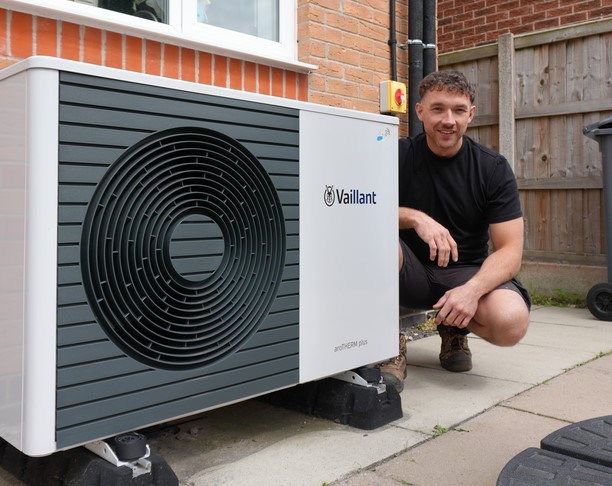
If you want the science-y explanation, an ASHP (that’s what the cool kids call them) works a bit like a fridge in reverse. A fridge takes heat from inside the box and dumps it outside to keep your milk cold. A heat pump takes heat from the outside air (yes, even cold British air) and pumps it inside to keep you warm. Similar to an air conditioner, a heat pump transfers heat, but it can do so in both directions—providing heating in winter and cooling in summer.
The magic lies in the efficiency. For every unit of electricity you put in, a well-designed heat pump can give you between 300% and 400% of that energy back as heat. Compare that to a gas boiler, which is usually around 90% efficient on its best day, and you can see why people are getting excited. Air source heat pumps do not burn fuel, which helps reduce air pollution.
Why the fuss?
- Carbon cutting: You’ll be slashing your carbon footprint significantly.
- Efficiency: As mentioned, they are incredibly efficient machines.
- Future proofing: We’re moving away from fossil fuels. Getting ahead of the curve is rarely a bad idea.
The crucial checklist: Get your home ready for a heat pump
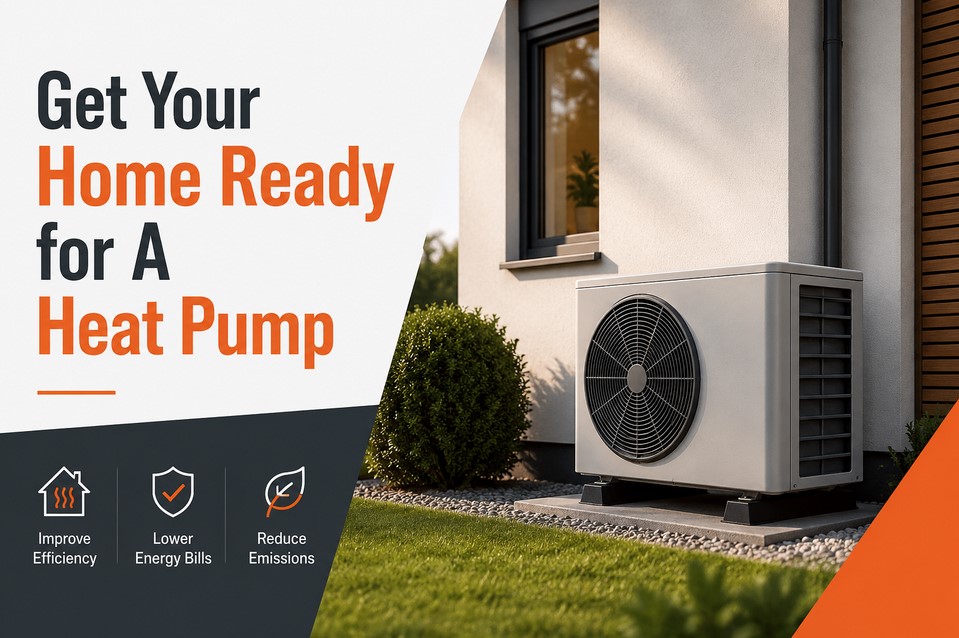
Now, here is the “but”. A heat pump isn’t like swapping a cheddar cheese sandwich for a ham one. It’s a different beast entirely. To get those lovely efficiency numbers, your home needs to be ‘heat pump ready’—this means assessing your insulation, plumbing, and structural suitability to ensure the system can operate efficiently.
1. Insulation is king (and queen)
Imagine trying to fill a bucket with water while it’s got holes in the bottom. That’s what heating a poorly insulated home is like.
Heat pumps typically run at lower flow temperatures than gas boilers (more on that in a moment). If your heat is escaping through the roof, walls, and windows faster than the pump can replace it, you’re going to be cold and your bills will be astronomical.
The Check:
- Loft Insulation: Do you have at least 270mm of fluff in the loft?
- Wall Insulation: Do you have cavity wall or solid wall insulation?
- Double Glazing: Are your windows keeping the warmth in?
If you answered “no” to these, fix the fabric of your building first. It’s the unsexy truth, but insulation is the best investment you can make.
2. The Great Radiator Reckoning
Gas boilers often blast water around your pipes at a scorching 70°C or more, known as a high flow temperature. Air source heat pumps operate at a lower temperature, typically between 35°C and 50°C, which may necessitate the replacement of existing radiators in some homes to maintain heating efficiency.
To get the same amount of heat into a room with cooler water, you need more surface area. This might mean radiator upgrades, such as swapping your current radiators for larger radiators or double-panel ones (K2s or K3s if you want to get technical), or installing underfloor heating, which is essentially one giant radiator you walk on. ASHPs are more efficient when paired with underfloor heating or larger radiators designed to operate at lower temperatures. Installing an air source heat pump may also require upgrades to your existing heating system, such as a hot water cylinder.
If you have an older property, high-temperature ASHPs can provide water at up to 70°C, allowing the possibility of using existing radiators that were originally sized for high flow temperature systems.
The Check:
- Are you willing to potentially upgrade your radiators?
- Do you have the wall space for slightly bigger units?
3. Space: The final frontier
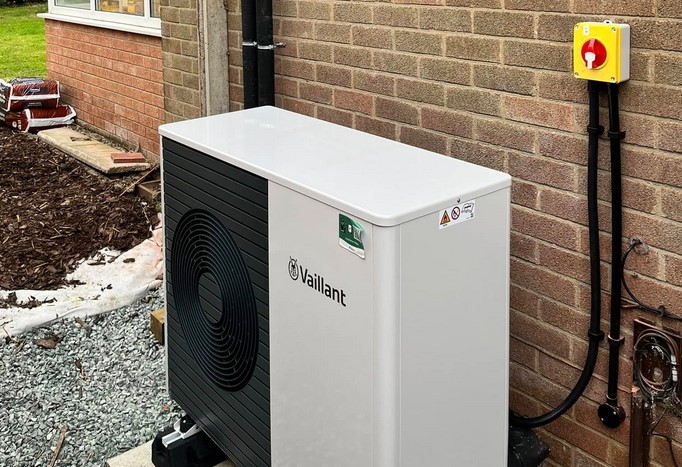
You need somewhere to put the thing. The outdoor component, known as the heat pump unit, is roughly the size of a washing machine (or two, depending on the power). Air source heat pumps require sufficient outdoor space for the installation of the external unit, typically in a garden or on a wall. It needs good airflow, so you can’t just jam it in a cupboard or box it in completely.
Inside, the internal unit of an air source heat pump requires space for installation, including a hot water cylinder and controls. A hot water cylinder is typically required for an air source heat pump installation to store heated water for use. If you currently have a Combi boiler and you’ve turned your old airing cupboard into a home office or a shrine to your shoe collection, you might need to find some space.
The Check:
- Do you have a suitable outdoor spot away from your neighbour’s bedroom window (for noise reasons)?
- Do you have space indoors for a hot water cylinder?
4. Planning permission (The boring bit)
The good news is that in most cases in the UK, installing an ASHP is considered “Permitted Development.” This means you don’t need to beg the council for permission, provided you meet certain criteria (like being 1 metre from the property boundary and meeting noise standards). For more details: Call us
However, if you live in a Listed Building or a Conservation Area, the rules change. Always check first.
The nuts and bolts: What makes up an air-source heat pump system?
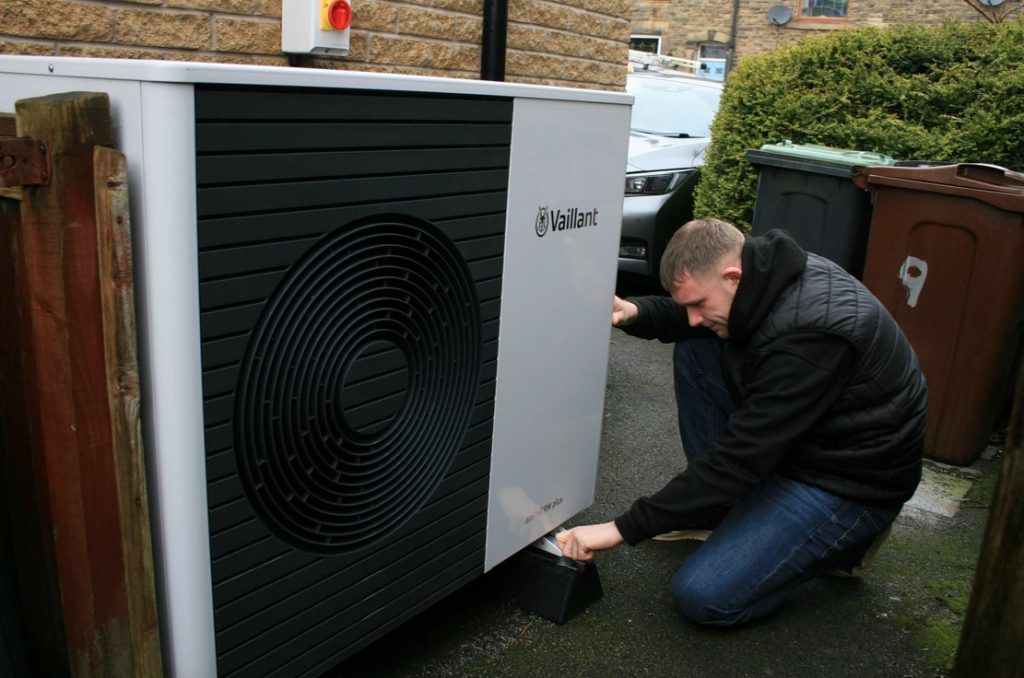
So, what’s actually humming away behind the scenes when you install an air source heat pump? Think of it as a team effort—each part playing a crucial role in keeping your home toasty and your energy bills in check.
First up is the outdoor unit, the real workhorse of your heat pump system. This box sits outside your home, quietly extracting heat from the outside air (yes, even when it’s chilly) and sending it inside. It’s connected to the indoor unit via insulated pipes, shuttling that precious source heat right where you need it.
Inside, you’ll usually find the indoor unit and a hot water cylinder. The indoor unit is the brains of the operation, managing heat flow and making sure your heating system runs smoothly. The hot water cylinder stores all the hot water your family needs for showers, baths, and washing up—no more waiting for the tank to heat up.
When it comes to distributing that warmth, you’ve got options. Underfloor heating is a popular choice, turning your floors into one big, gentle radiator. If you prefer radiators, you might need to upgrade to larger ones to make the most of your new heat pump’s lower flow temperatures. Either way, the goal is to provide heating efficiently and comfortably throughout your home.
Want to go the extra mile? Some homeowners pair their air source heat pump with solar panels, letting the sun help power the system and further reduce energy bills. Others add a buffer tank to store extra heat, making the whole setup even more responsive.
Of course, the magic only really happens in a well insulated home. Double glazing, loft insulation, and a draught-free building mean less heat loss and better overall efficiency from your heat pump system. And if you’re upgrading from a gas boiler or combining systems, a professional heat pump installer can design a solution that fits your existing heating system and your lifestyle.
Don’t forget, the Boiler Upgrade Scheme can take a big bite out of the upfront cost, making this low carbon, cost effective heating system more accessible than ever. With the right setup, you’ll enjoy reliable space heating and hot water, a smaller carbon footprint, and the satisfaction of a future-proof home—all thanks to the clever nuts and bolts of your air source heat pump.
Let’s talk money: Costs, grants and financial support
We won’t sugarcoat it; the upfront cost of heat pump installation is higher than a boiler swap. The installation process involves an in-home survey and assessment to determine the right system for your property. The estimated costs for installing an air source heat pump (ASHP) range from £3,000 to £15,000 before grants, which is higher than a standard gas boiler. The initial cost can be high, but government grants are available to help offset these costs.
But wait! The government really wants you to do this. In England and Wales, a grant of £7,500 is available through the Boiler Upgrade Scheme, and most homeowners are eligible. If you live in Scotland, you might be able to get help from Home Energy Scotland, which offers interest-free loans or grants for installing a new heating system or clean, low carbon heating. In Northern Ireland, the NI Sustainable Energy Programme (NISEP) may provide support for heat pump installations, with eligibility and grant amounts for a heat pump depending on your circumstances and location.
Heat pump installations benefit from being exempt from VAT, reducing the overall cost. Several energy suppliers offer finance deals, such as 0% finance and low interest, to help spread the cost of installing a heat pump. You may also be able to get cashback through your mortgage, with some banks offering up to £2,000 cashback for heat pump installations through approved schemes.
Air source heat pumps can add value to a property, with studies indicating a 2-3% increase for homes with such systems. They are energy efficient and can save homeowners around £100 per year on energy bills when using smart tariffs. By taking advantage of smart tariffs and using your heat pump during off peak hours, you can further reduce your energy usage and heating costs.
Air source heat pumps typically have a lifespan of up to 20 years, which is longer than traditional gas boilers. Using an air source heat pump as your new heating system can lead to lower running costs and reduced energy costs compared to traditional heating systems, especially when combined with renewable energy sources. Heat pumps compared to traditional boilers are 3x more energy efficient and can produce 3kW of heat for every 1kW of electricity used, making them a highly energy efficient and low carbon heating solution. The efficiency of a heat pump is measured by the Coefficient of Performance (COP) or Seasonal Coefficient of Performance (SCOP), and the heating outputs of air source heat pumps range from 3.5kW to 15kW.
Heat pumps generate heat and generate hot water by transferring energy from the air, making them a sustainable choice for low carbon heating. If your home is poorly insulated, a larger heat pump may be required to compensate for heat loss, which can increase installation and running costs. When considering a heat pump installation, it’s important to get estimated costs based on your postcode and home details, and to consult your energy supplier for available finance options and support.
The Boiler Upgrade Scheme (BUS)
Currently, the Boiler Upgrade Scheme offers a grant of £7,500 towards the cost and installation of an air source heat pump. That is a substantial chunk of change that brings the cost much closer to that of a standard boiler replacement.
Running costs
Will it be cheaper to run? Generally, yes—if the system is designed correctly. Because electricity is currently more expensive per unit than gas, heat pump efficiency (the COP) is critical. The efficiency of a heat pump is measured by the Coefficient of Performance (COP) or the Seasonal Coefficient of Performance (SCOP), which reflects how well the system performs across varying seasonal conditions. Energy usage and energy efficiency are key factors in determining your savings, and using an air source heat pump can lead to lower running costs compared to traditional heating systems, especially when combined with renewable energy sources. If your system is designed by a pro (ahem, like us), you should see savings. If it’s slapped in without thought, you might not.
Why the installer matters more than the box
You could buy the most expensive, gold-plated heat pump on the market, but if it’s installed by someone who thinks “flow rate” is a type of yoga, it won’t work properly.
At Lloyd’s Gas, we are Heat Geeks. This isn’t just a cool nickname we gave ourselves; it’s a rigorous certification in advanced heating system design. We obsess over hydraulics, pipe sizing, and low-flow temperatures so you don’t have to.
We don’t just bolt a box to the wall; we design a system that fits your home like a glove. That’s why we have over 100 five-star reviews—we care about the details.
Checklist: Is your home ready?
Use this quick check list ASHP UK style to see where you stand:
- Heat Pump Ready: Is your home ‘heat pump ready’? Consider whether existing plumbing, insulation, and structural aspects are suitable for installation.
- Insulation: Is the loft and cavity wall insulation up to scratch?
- Space: Do you have room for an outdoor unit and an indoor cylinder?
- Upgrades: Are you open to changing radiators or adding underfloor heating?
- Budget: Are you ready for the investment (minus the £7,500 grant)?
- The Installer: Have you found a company that understands system design? A qualified installer will assess your property to determine if any changes are needed to ensure the heat pump operates efficiently.
Frequently Asked Questions
Will an ASHP get my home to a comfortable temperature even in the winter?
Absolutely. Modern systems can extract heat from the air even when it’s -20°C outside. They work a bit harder, but they still work. Scandinavia is full of them, and it gets fairly nippy there.
Are they noisy?
Not really. Modern units are about as loud as a fridge humming or a quiet conversation. Unless you’re sleeping directly on top of the fan unit, you likely won’t notice it.
Does a heat pump run 24/7?
They are designed to run for longer periods than a gas boiler, maintaining a steady temperature rather than blasting heat in short bursts. It’s a “low and slow” approach to heating.
Can I keep my existing radiators?
Sometimes, but often they need to be upgraded to larger sizes to provide enough heat at the lower flow temperatures heat pumps use. Air source heat pumps typically operate at lower temperatures than traditional boilers, so radiator upgrades may be required to ensure efficient operation. We can calculate this for you during a survey and manage the entire radiator upgrade process, including design, installation, and any related work such as pipes and electric systems, ensuring a seamless experience without third-party involvement.
What’s the difference between an air source heat pump and a ground source heat pump?
The main difference lies in where they pull heat from. An air source heat pump (ASHP) extracts heat from the outside air, while a ground source heat pump (GSHP) draws heat from – you guessed it – pipes buried underground. For properties with limited outdoor space, GSHPs can use vertical pipes installed in deep boreholes to extract heat from deeper underground, as opposed to horizontal pipe systems that require larger gardens. GSHPs are often more efficient because ground temperatures are steadier than air temperatures, but they require more space for installation and tend to cost more upfront. ASHPs are easier to install and more common, particularly in areas where space is limited.
How much more efficient is an ASHP compared to a traditional gas boiler?
It depends on the system, but air source heat pumps (ASHPs) are up to three times more energy efficient than traditional boilers. For every 1kW of electricity used, a heat pump can produce 3kW of heat, making them a highly energy efficient heating solution. In comparison, a traditional boiler typically maxes out at around 90% efficiency, meaning some energy is always lost. This increased efficiency can lead to lower energy bills and reduced carbon emissions over time.
Ready to stop burning money?
If you’ve ticked the boxes—or even if you’re just “heat pump curious”—the next step is a proper assessment.
Don’t leave your comfort to chance. Choose the team that understands the science behind the warmth. Whether you need a full system design or just honest advice on whether your home is ready, Lloyd’s Gas is here to help.
Want to know if you qualify for the £7,500 grant? Get a fast and free estimate for your installation today.