


Let’s be honest, for most people thinking about a home’s heating system isn’t exactly thrilling. It’s up there with watching paint dry or listening to parliamentary debates. But what if we told you there’s a way to heat your home that’s kinder to the planet and your wallet?
At Lloyd’s Gas, we’re not just about boilers; we’re passionate about the future of heating. That’s why we’re excited to talk about air source heat pumps. They sound complicated, like something from a sci-fi movie, but they’re surprisingly simple and incredibly effective.
This guide will break down exactly what an air source heat pump is, how it works, and whether it could be the perfect upgrade for your home. By the end, you’ll have a clear understanding of this clever technology and why it’s becoming a popular choice for homeowners across the UK.
What is an air source heat pump?
So, what is an air source heat pump (or ASHP, for those who love an acronym)? Put simply, it’s a clever piece of kit that doesn’t create heat but moves it.
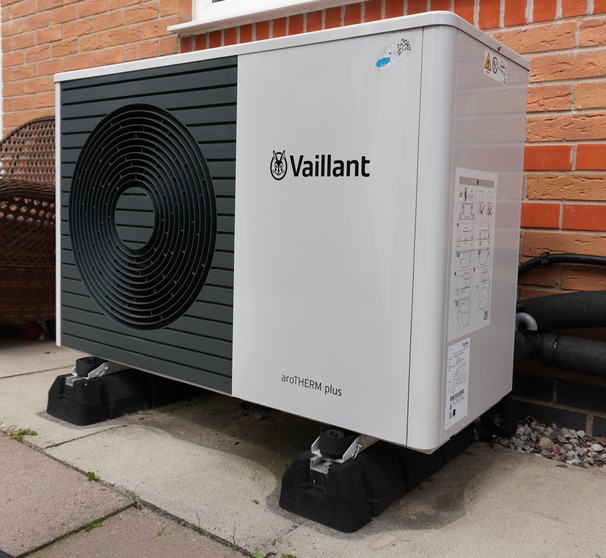
An air source heat pump works a bit like a reverse refrigerator. It takes heat from the outside air—yes, even when it’s cold—and transfers it inside your home to power your central heating and provide hot water. It’s an efficient, low-carbon alternative to traditional fossil fuel boilers.
There are two main types of air source heat pump in the UK:
Air-to-water
This is the most common type. It transfers heat from the outside air into water, which then circulates through your radiators or underfloor heating system. It can also heat water for a storage cylinder for your taps and showers.
Air-to-air
This type transfers heat from the outside air directly into the air inside your home using fans. These systems don’t provide hot water.
For most UK homes, an air-to-water system is the go-to choice for a complete heating and hot water solution.
How does an air source heat pump work?
This is where a little bit of magic (or rather, science) comes in. An ASHP absorbs heat from the outside air into a special refrigerant fluid, even on a frosty winter day. Here’s a step-by-step description of how an air source heat pump works:
- Absorption: A fan draws outside air over a network of tubes containing a refrigerant fluid. This fluid is very cold, so it absorbs heat from the air and turns into a gas.
- Compression: The gas passes through a compressor, which increases its pressure. This process significantly raises its temperature.
- Heat transfer: The hot, high-pressure gas then travels to a heat exchanger. Here, it transfers its heat to the water in your central heating system, warming up your radiators and hot water cylinder.
- Expansion: As it loses heat, the refrigerant cools down and turns back into a liquid. It then passes through an expansion valve, which lowers its pressure and temperature, ready to start the cycle all over again.
This continuous process allows the pump to efficiently transfer heat from the outside in. In fact, for every unit of electricity a heat pump uses, it can generate three to four units of heat, making it over 300% efficient. In comparison, even the best modern gas boilers are around 95% efficient.
What makes an ASHP better than a gas boiler?
Switching to an air source heat pump comes with some significant perks that benefit both the environment and your bank balance.
- Lower carbon footprint, increased energy efficiency: Since they don’t burn fossil fuels, ASHPs produce zero carbon emissions at the point of use. This drastically reduces your home’s environmental impact.
- Reduced energy bills: While electricity is currently more expensive than gas, heat pumps are so efficient that you can still save money on your heating bills, especially if you’re replacing an old, inefficient system like an oil boiler or electric storage heaters.
- Sustainable cosiness: Air source heat pumps are impressively reliable. They can extract heat from the air in temperatures as low as -20°C, ensuring your home stays warm and cosy throughout the British winter.
- Government grants available: The UK government is encouraging homeowners to switch to low-carbon heating. Through schemes like the Boiler Upgrade Scheme, you can get a significant grant to help with the installation cost.
Air source heat pump installation
A common question we hear is about the cost of installation. The typical cost for an air source heat pump installation in the UK is around £11,000, but this can vary depending on the size of your property and whether you need to upgrade your radiators.
Boiler Upgrade Scheme
However, the Boiler Upgrade Scheme in England and Wales currently offers a grant of £7,500 towards the cost. This can make the switch much more affordable.
At Lloyd’s Gas, our team provides tailored installations designed for your home’s specific needs. We handle everything from the initial survey to the final commissioning, ensuring your system is optimised for peak performance.
Potential drawbacks to consider
While there are many benefits, it’s important to be aware of the potential drawbacks. The main consideration is the running cost. As electricity is more expensive per unit than gas, the running costs for a heat pump can sometimes be slightly higher than a new gas boiler.
However, heat pumps are incredibly efficient, and as electricity prices change and the grid becomes greener, these running costs are expected to become even more competitive. For homes currently using oil, LPG, or old electric heating, the savings are often immediate and substantial.
Why choose Lloyd’s Gas for your heat pump?

When it comes to renewable heating, expertise matters. At Lloyd’s Gas, we’re not just installers; we’re passionate heating experts. We hold multiple accreditations, and our 100+ five-star reviews from happy customers speak for themselves.
We’re also proud to be certified Heat Geeks, meaning we’ve completed one of the most comprehensive heating design courses in the industry. This ensures that when we design and install your system, every detail—from pipe sizing to flow rates—is meticulously planned for maximum efficiency. Our outstanding workmanship and honest pricing mean you get a system that’s built to last and performs flawlessly.
Frequently asked questions (FAQ)
Will I need to replace my radiators?
Not always. Heat pumps work best with larger radiators or underfloor heating because they operate at a lower flow temperature than traditional boilers. We’ll assess your current radiators during our survey and advise if any upgrades are needed.
Do air source heat pumps still work in winter/cold weather?
Absolutely. They are designed to work efficiently in temperatures well below freezing. They can keep your home warm and toasty even on the coldest UK winter days.
Are air source heat pumps noisy?
Modern heat pumps are very quiet, with a sound level similar to a refrigerator. We always ensure the outdoor unit is positioned to minimise any disturbance.
How much space do I need for an air source heat pump?
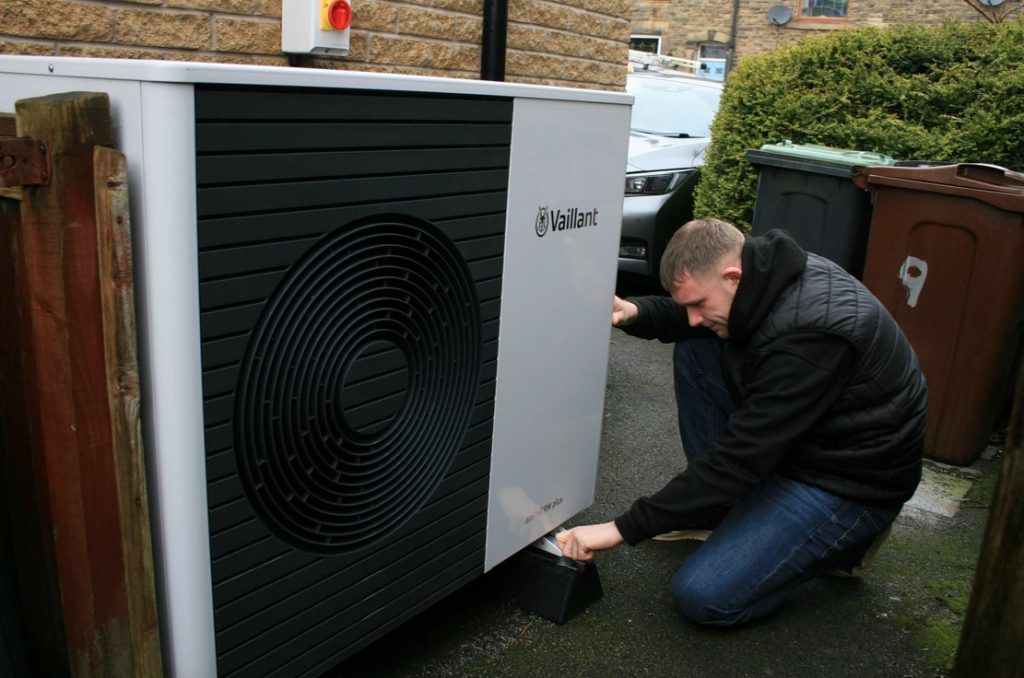
You’ll need a bit of outdoor space for the external heat pump unit, typically on a wall or on the ground next to your property. It needs good airflow around it. You’ll also need space indoors for a hot water cylinder, which usually fits in a standard airing cupboard.
What’s the difference between air source and ground source heat pumps, and which is better?
Air source heat pumps extract heat from the air outside, even in colder temperatures, and use it to heat your home and water. These heat pump systems are generally easier and cheaper to install since they require less ground work and can be placed on an external wall or the ground near your property.
Ground source heat pumps, on the other hand, draw heat energy from the ground through a network of buried pipes. These systems are efficient because ground temperatures remain relatively stable throughout the year. However, they require more space for installation and involve higher upfront costs due to the need for excavation.
Choosing between them depends on your specific circumstances. If you have limited outdoor space or a smaller budget, an air source heat pump might be the better choice. If long-term efficiency and the ability to accommodate the installation cost and space requirements are priorities, then a ground source heat pump could be more suitable.
Ready to slash your energy bills and replace your existing boiler? Reach out to our friendly heat pump installers today!
Making the switch to an air source heat pump is a big decision, but it’s one that can lead to a warmer, greener, and more affordable home. With government grants making it more accessible than ever, now is the perfect time to consider an upgrade.
If you’re ready to explore how an air source heat pump could work for your home, get in touch with the friendly experts at Lloyd’s Gas. We’ll provide a free, no-obligation quote and a tailored solution that fits your home and budget perfectly.