

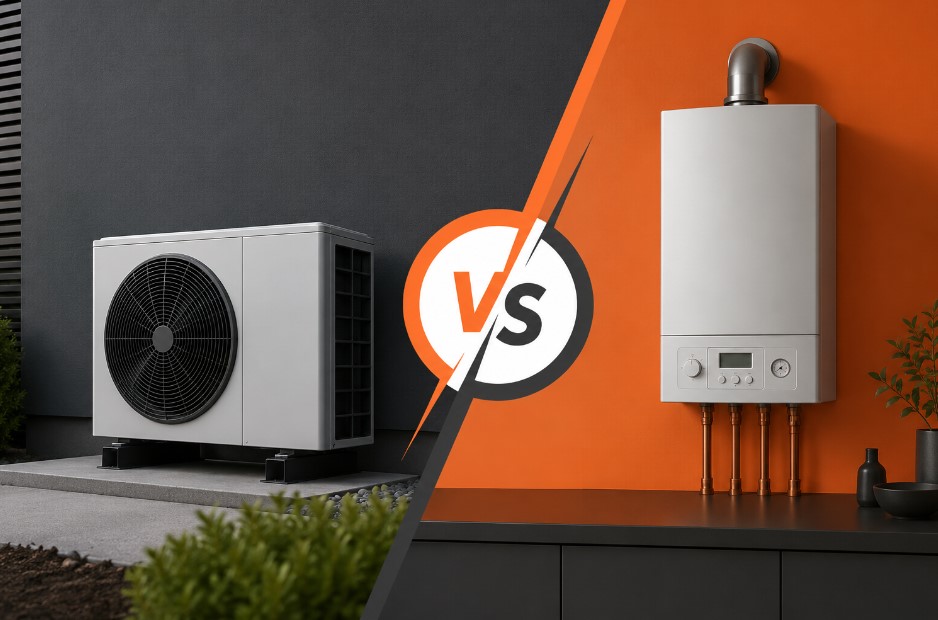

Trying to decide how to heat your home can feel like navigating a minefield. With energy prices fluctuating and the push for greener living getting louder, you are likely wondering what makes the most financial sense for your property.
If you are weighing up an air-source heat pump vs gas boiler, you need clear, straightforward facts. It is easy to get bogged down in technical jargon or conflicting advice online. Some people insist heat pumps will leave you shivering in a woolly hat, while others promise they will instantly slash your bills to zero. The reality sits somewhere in the middle, and finding the right answer depends entirely on your specific property.
As Manchester-based heating specialists, we spend our days designing and installing both bespoke boiler systems and high-efficiency heat pumps. We aren’t here to push you toward one technology over the other. Instead, we want to give you a transparent look at upfront costs, running expenses, environmental impacts, and everyday performance so you can make an informed choice.
Air-source heat pump vs gas boiler: what’s the actual difference?
To make a fair gas boiler heat pump comparison, it helps to understand how these two systems actually generate warmth for your radiators and taps.
How a gas boiler works
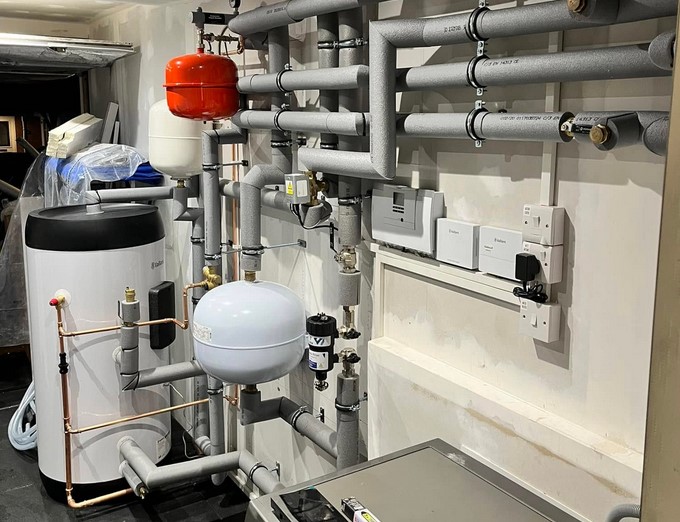
A gas boiler relies on combustion. It burns fossil fuels to heat water, which is then pumped around your radiators and into your hot water cylinder (or directly to your taps if you have a combi boiler). They run at high temperatures, usually around 60°C to 75°C, meaning they heat up your rooms incredibly fast.
How an air source heat pump works
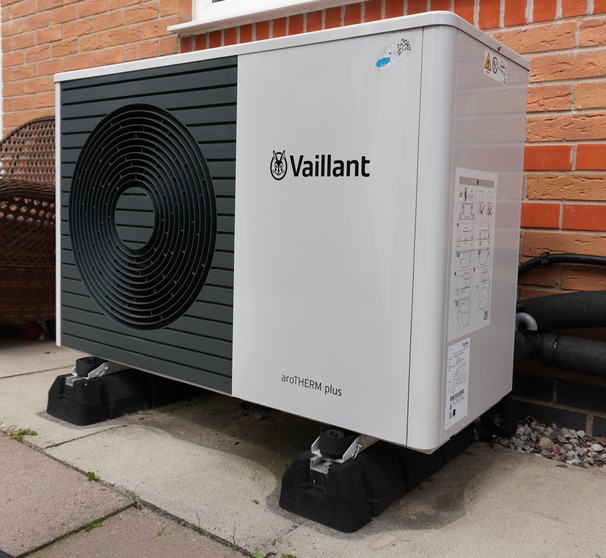
Instead of burning fuel, a heat pump moves existing heat from one place to another. It works a bit like your kitchen fridge, but in reverse. The outdoor unit extracts ambient heat from the outside air, compresses it to increase the temperature, and transfers that warmth into your home’s heating system.
Because they move heat rather than generate it from scratch, they are incredibly efficient. For every unit of electricity you put into a well-designed heat pump, you can get three or four units of heat out. This is known as the Coefficient of Performance (COP).
Upfront costs in the UK: purchase, installation and extras
When looking at an ASHP vs boiler UK installation, the initial price tag is often the biggest hurdle.
Gas boiler installation/replacement
Replacing a standard gas boiler usually costs between £2,500 and £4,000, depending on the model and the complexity of the pipework. It is a relatively quick job, assuming your existing radiators and gas pipes are in good condition.
Air source heat pump installation
An air source heat pump requires a larger initial investment. A full installation can range from £10,000 to £15,000. However, the UK government’s Boiler Upgrade Scheme currently offers a £7,500 grant to homeowners switching from fossil fuels to a heat pump, which significantly bridges the gap.
Keep in mind that a heat pump installation often involves “unexpected” extras that a boiler swap doesn’t. Because heat pumps run at lower flow temperatures, you might need larger radiators to emit the same amount of warmth into your rooms. You will also need space for a hot water cylinder, as heat pumps cannot provide instant hot water like a combi boiler. We always conduct a thorough, bespoke survey to ensure you aren’t hit with surprise costs halfway through the job.
Running costs and savings: the numbers that matter day-to-day
Will a heat pump actually save you money on your monthly bills? The honest answer is: it depends.
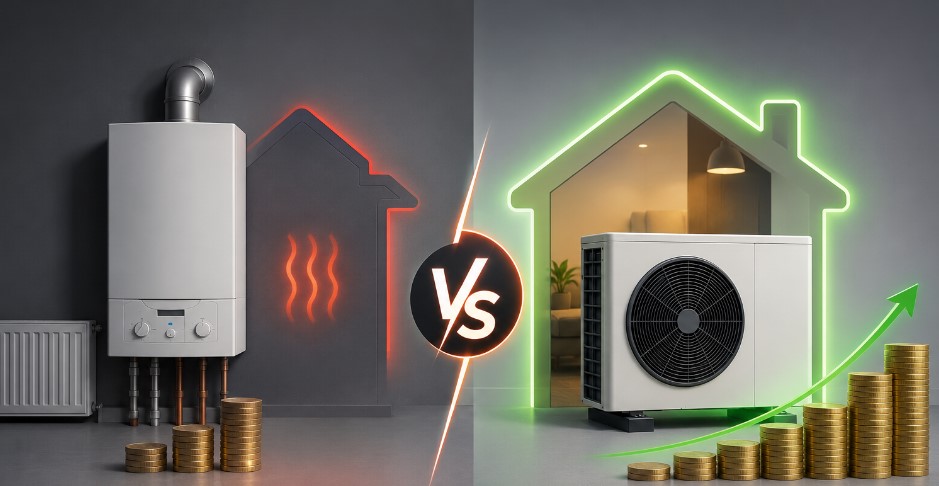
Gas is currently cheaper per unit than electricity in the UK. However, because a heat pump is roughly 300% to 400% efficient compared to a brand-new gas boiler’s 90% efficiency, the running costs often balance out.
To see genuine savings, your property needs to be well-insulated to prevent heat from escaping. Furthermore, taking advantage of smart, heat pump-friendly electricity tariffs that offer cheaper overnight rates can drastically reduce your running costs.
Environmental impact: emissions today and looking ahead
If reducing your carbon footprint is a priority, the winner here is clear. Gas boilers burn fossil fuels, releasing carbon dioxide directly into the atmosphere every time they fire up.
An air source heat pump produces zero local emissions. While the electricity used to power the pump might come from a grid that still relies partly on gas, the UK grid is rapidly incorporating more wind, solar, and nuclear energy. This means your heat pump will actually get greener and cleaner with every passing year.
Comfort and performance: which feels better to live with?
Living with a heat pump requires a slight shift in mindset. A gas boiler provides blasts of high heat. You turn it on, the radiators get blazing hot, and the room warms up quickly.
A heat pump is designed to run low and slow. It provides a steady, continuous stream of gentle warmth, maintaining a constant comfortable temperature throughout the day. Your radiators will feel warm to the touch, rather than too hot to handle.
And if you are worried about the great British winter, don’t be. A properly designed heat pump can extract thermal energy from the air even when it is freezing outside, maintaining brilliant performance right down to -20°C.
Maintenance, lifespan and reliability
Both systems require an annual service to keep them running safely and efficiently, and to validate their warranties.
A good quality gas boiler will typically last between 10 and 15 years before parts start becoming scarce or it becomes too inefficient to repair.
Heat pumps have fewer moving parts and no combustion elements, meaning there is less internal wear and tear. A well-maintained heat pump can comfortably last 15 to 20 years. However, this lifespan heavily relies on the system being sized and installed correctly in the first place.
Why installer expertise matters more than you think
You can buy the most expensive, top-of-the-range heating equipment on the market, but if it is installed poorly, it will cost you a fortune to run.
System design is everything. This includes calculating precise heat loss for every room, sizing the pipework correctly, and ensuring the right flow rates. This is why our team at Lloyds Gas are certified Heat Geeks. We have completed rigorous training in advanced heating system design to ensure every pump and boiler we fit operates at peak efficiency.
We don’t do guesswork or one-size-fits-all installations. We tailor the design to your specific property, which is exactly why we have earned over 100 five-star Trustpilot reviews from homeowners across Manchester and the North West.
Frequently asked questions
Is an air source heat pump cheaper to run than a gas boiler in the UK?
It is usually about the same, or slightly cheaper, provided the system is designed correctly and your home is reasonably well-insulated. Moving to a specialist off-peak electricity tariff can unlock much bigger savings.
Do I need new radiators for a heat pump?
Not necessarily all of them. We calculate the heat loss for each individual room. Often, existing radiators are already oversized and work perfectly fine, but you may need to upgrade a few of them to ensure your rooms stay warm at lower flow temperatures.
Will I still get heat energy from my pump in the winter?
Absolutely. The technology is hugely popular in Scandinavia. A well-designed heat pump will continue to extract heat from the outside air and keep your home perfectly warm even when temperatures drop to -20°C.
Are air source heat pumps better than ground source heat pumps?
Air source heat pumps are often considered a more practical choice for many homeowners due to their simpler installation process and lower upfront costs. Unlike ground source heat pumps, which require significant land space and extensive groundwork for installation, air source systems can be installed with minimal disruption and are suitable for a wider range of properties.
Additionally, air source heat pumps tend to have faster installation times and are easier to maintain. While ground source heat pumps can achieve slightly higher efficiency in some situations, the versatility and affordability of air source heat pumps make them the preferred option for most homeowners looking to improve their energy efficiency with minimal hassle.
Are heat pumps noisy?
Modern outdoor units are surprisingly quiet, often likened to the hum of a domestic fridge. During the design phase, we carefully plan the siting of the outdoor unit to ensure it complies with planning regulations and won’t bother you or your neighbours.
Ready to make the switch? Let’s talk heating
If you are weighing up your options and want a straight answer for your home, we are here to help. Whether a bespoke gas boiler setup or a highly efficient heat pump is the right path forward, we will design a system that actually performs the way it should.
Give us a call or drop us a message today. If you want a quicker starting point, you can use our fast, free heat pump estimate tool on our website, and we will refine it with a proper, bespoke assessment of your property.